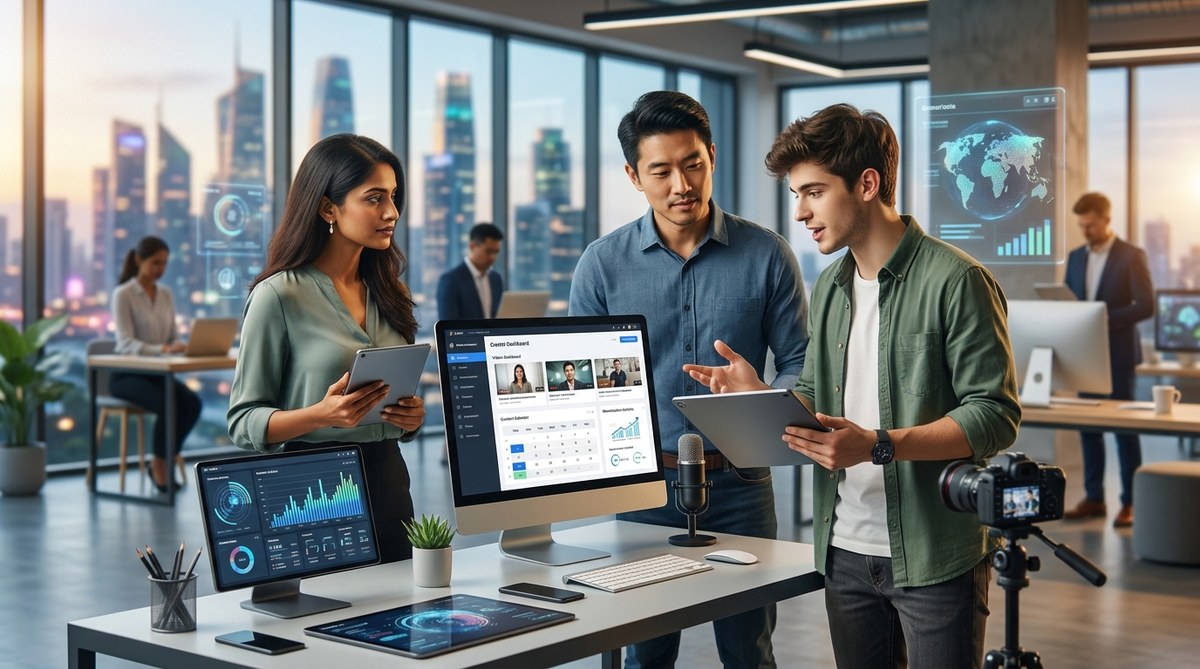
The creator economy is no longer just a side hustle for influencers. In 2026, it has become a serious, multi-billion dollar industry that attracts founders from every corner of the world. If you are a global entrepreneur looking for your next big move, this is where the action is. The barriers to entry have shifted. You no longer need a Silicon Valley address or a massive marketing budget. What you need is a clear strategy, a global mindset, and the right tools to connect creators with their audiences across borders.
The creator economy in 2026 offers global entrepreneurs a chance to build scalable businesses by providing infrastructure, education, and payment solutions to creators worldwide. Success depends on understanding local regulations, using AI tools for personalization, and building trust with diverse audiences. Focus on niche communities and cross-border monetization to stand out.
Why the Creator Economy Attracts Global Founders
The creator economy is built on a simple idea: individuals can make money by producing content. But the real opportunity for entrepreneurs lies in the supporting layers around those creators. Think about the tools they use, the platforms they rely on, and the services they need to manage their business.
Global entrepreneurs are naturally suited for this space. They understand cultural nuances. They can spot gaps in local markets that bigger companies often miss. For example, a founder based in Lagos might notice that local creators need a payment system that works with mobile money. A founder in Jakarta could build a platform that helps creators in Southeast Asia sell digital products to audiences in the Middle East.
The key is to think beyond borders from day one. The creator economy rewards those who can operate across time zones and languages. If you are a remote-first founder, this is your playground.
The Three Pillars of a Creator Economy Startup in 2026
To build a successful business in this space, you need to focus on three core areas. These pillars have evolved from 2024 and 2025 trends, and they are now the standard for any serious player.
-
Infrastructure and Tooling: Creators need reliable software to edit videos, schedule posts, manage memberships, and track analytics. The best startups in 2026 offer all-in-one solutions that work on mobile devices, because many creators in emerging markets use phones as their primary computer.
-
Monetization and Payments: Cross-border payments remain one of the biggest headaches for global creators. Entrepreneurs who solve this problem win. Think about building a platform that handles currency conversion, tax withholding, and instant payouts in over 50 currencies.
-
Community and Education: Creators want to learn from each other. They also want to build loyal fan bases. Startups that create private communities, offer online courses, and provide mentorship programs are thriving. These services help creators turn casual followers into paying subscribers.
A Practical Roadmap for Entering the Market
If you are ready to start, follow this numbered list of steps. It is based on what successful global entrepreneurs did in 2025 and early 2026.
-
Identify a niche that is underserved by big platforms. Look at regions like Latin America, Africa, or South Asia. Ask yourself what local creators need that they cannot get from US or European tools.
-
Build a minimum viable product that solves one specific pain point. Do not try to do everything at once. A simple tool for scheduling social media posts in three languages could be enough to start.
-
Partner with local creators for beta testing. Offer them free access in exchange for feedback. This builds trust and gives you real world data to improve your product.
-
Set up a legal structure that allows you to accept payments from multiple countries. Use a service like Stripe Atlas or a similar global entity formation tool. This step is critical for compliance.
-
Launch with a focus on one region first. Master that market before expanding. For instance, if you start in Brazil, learn the local payment methods, tax rules, and content trends before moving to Mexico or Argentina.
Common Mistakes Global Entrepreneurs Make
Even experienced founders can stumble when entering the creator economy. Here is a table that shows the difference between what works and what does not.
| Successful Approach | Common Mistake |
|---|---|
| Build for mobile first users | Assume everyone uses a desktop computer |
| Offer local payment options like M-Pesa or Pix | Only support credit cards and PayPal |
| Hire a team that speaks the local language | Use English only for all communications |
| Respect local content regulations | Ignore regional censorship or copyright laws |
| Start with a small, engaged community | Try to scale to millions of users immediately |
The table above highlights a simple truth. Global entrepreneurs who adapt to local conditions succeed. Those who try to copy a US based model without changes often fail.
How AI Is Changing the Game in 2026
Artificial intelligence is now a standard part of every creator economy startup. But the way global entrepreneurs use AI matters more than the technology itself.
AI helps with translation, content generation, and audience analysis. A creator in Thailand can use an AI tool to dub their videos into Spanish, Portuguese, and Arabic in minutes. An entrepreneur in Kenya can build an AI assistant that helps creators write sponsorship emails in perfect French.
The best founders do not just slap AI onto an existing product. They redesign their entire workflow around it. For example, a startup called Kreative (fictional example) lets creators upload a raw video and automatically generates thumbnails, captions, and social media posts in ten languages. That is the kind of tool that wins in 2026.
“The creators who succeed in 2026 will be the ones who treat AI as a co-founder, not just a feature. They will use it to handle the boring parts so they can focus on building real connections with their audience.” – A global entrepreneur who scaled to 50,000 creators in 18 months.
Key Business Models That Work Right Now
Not every creator economy startup needs to be a platform. Some of the most profitable businesses are service based. Here is a bulleted list of models that are gaining traction among global entrepreneurs in 2026.
- White label membership platforms: Build a branded subscription service for creators. They pay you a monthly fee, and you handle the tech, payments, and hosting.
- Creator focused fintech: Offer banking, lending, or investment products designed for people with irregular income from content creation.
- Cross border marketing agencies: Help creators in one region get brand deals with companies in another region. Take a percentage of each deal.
- Digital product marketplaces: Sell templates, presets, fonts, and stock footage that creators can use in their work. Focus on assets that work across cultures.
- Educational platforms for creators: Teach specific skills like video editing, audience growth, or negotiation. Offer courses in multiple languages.
Each of these models can be started with a small team. The key is to pick one and execute well before adding more services.
Building a Global Team for Your Creator Economy Startup
Your team will make or break your business. In 2026, the best teams are distributed across multiple continents. This gives you 24 hour coverage and cultural insight into different markets.
When hiring, look for people who are creators themselves. They understand the pain points better than anyone else. A developer who also runs a YouTube channel will build better features for video creators. A marketer who has a newsletter will know how to grow an email list.
Use asynchronous communication tools like Notion and Slack. Hold regular video calls but keep them short. Trust your team to do their work without micromanagement. This approach works especially well for global entrepreneurs who are used to operating across time zones.
For more on this topic, read about how to build a global team that drives innovation across borders.
The Role of International Accelerators
Many global entrepreneurs are turning to international startup accelerators to get their creator economy startups off the ground. These programs offer funding, mentorship, and access to networks that would take years to build on your own.
Accelerators are especially helpful for founders who come from emerging markets. They provide credibility when talking to investors or partners in North America and Europe. They also help you avoid common legal and regulatory mistakes.
If you are considering this route, look for accelerators that specialize in creator economy or digital media. Some programs focus specifically on founders from Africa, Southeast Asia, or Latin America. These niche programs understand your challenges better than generalist accelerators.
Learn more about why international startup accelerators are a game changer for global entrepreneurs.
What Sets Successful Global Entrepreneurs Apart
The founders who thrive in the creator economy share a few traits. They are curious about other cultures. They are comfortable with uncertainty. They build products that solve real problems for real people, not just theoretical use cases.
They also understand that the creator economy is not just about YouTube or Instagram. It includes podcasters, newsletter writers, online course creators, and even people who sell digital art. The definition of a creator is broader than ever.
In 2026, the biggest opportunities are in niche communities. A platform for cooking creators in the Middle East can be more valuable than a general platform that tries to serve everyone. A tool for helping fitness creators in Brazil sell workout plans to clients in Europe can generate steady recurring revenue.
For a deeper look at this mindset, check out what successful global entrepreneurs do differently in 2026.
Your Next Steps as a Global Entrepreneur
The creator economy is still growing. New platforms emerge every month. New regulations appear in different countries. But the fundamentals remain the same. If you help creators make money and build community, you will have a sustainable business.
Start small. Pick one niche. Talk to ten creators in that niche. Build something they will use. Then iterate based on their feedback. That is how every successful creator economy startup began.
The world is full of talented people who want to share their work. They need your help to turn their passion into a livelihood. If you can provide that help, you will not only build a profitable company. You will also empower thousands of creators around the globe.
Now go find your niche and start building. The creator economy in 2026 is waiting for you.

Leave a Reply