Building a brand that crosses borders is not just about translating your website and hoping for the best. It is about understanding the subtle rhythms of local culture, respecting different consumer behaviors, and adapting your core promise without losing your soul. In 2026, the digital storefront is global, but the buying experience is intensely local. Whether you are a solo founder with a laptop or a marketing manager at a scaling company, the path to international relevance requires a blend of bold vision and humble listening.
The brands that win internationally do not treat foreign markets as an afterthought. They treat them as distinct audiences with distinct needs. They recognize that a color that signals trust in one country might signal caution in another. They understand that humor rarely translates directly, and that payment preferences are not universal. This is the real work of going global.
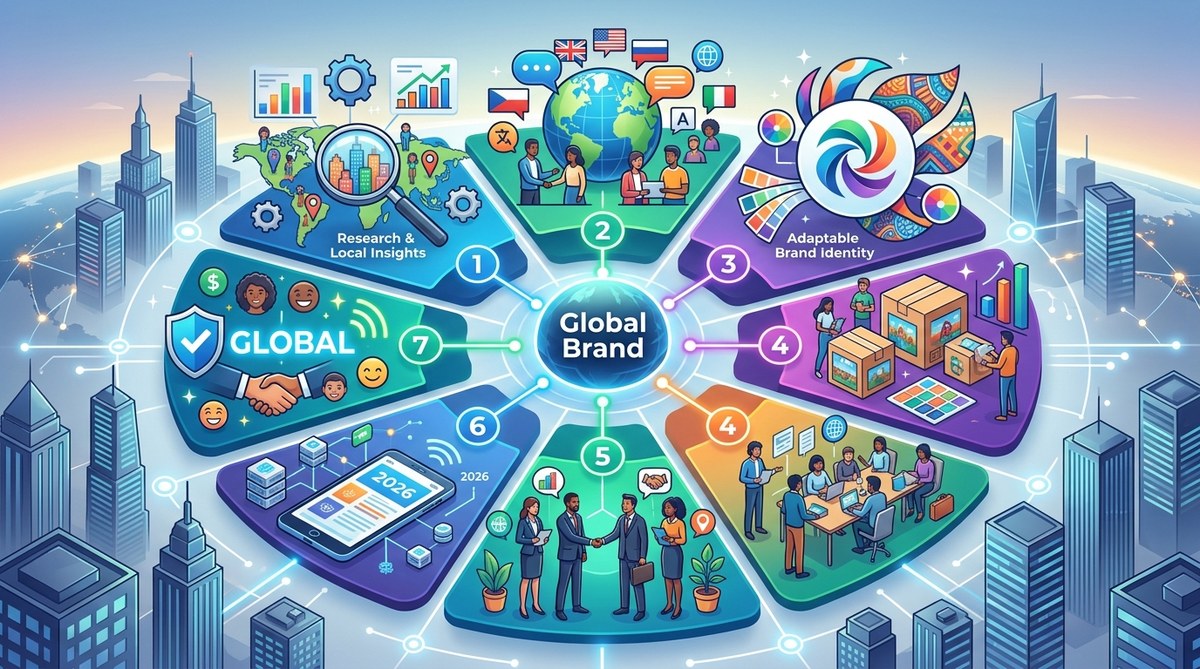
To build a global brand in 2026, you must localize your message, not just translate it. Success comes from deep market research, adapting your product to local payment and delivery expectations, and building a team that reflects the cultures you serve. It is a continuous cycle of listening, learning, and iterating.
Start with Cultural Curiosity, Not Assumptions
Before you even think about logistics, you need to understand the cultural landscape. This goes beyond reading a blog post about etiquette. It means spending time in the market, either physically or through deep digital immersion. Look at how local competitors speak to their audience. What social causes do they champion? What tone do they use? Is it formal and respectful, or casual and playful?
For example, a fitness brand expanding to Japan might need to emphasize community and discipline over the individualistic “no pain, no gain” messaging that works in the United States. A food delivery app in Brazil might find that customers expect to pay in installments, a payment method that is less common in the US. These are not just operational details; they are brand signals. They tell your customer that you see them and understand their world.
You can start by mapping out your top three target markets. For each, write down one cultural value, one consumer pain point, and one local competitor’s strength. This simple exercise forces you to move past stereotypes and into strategy. It is the foundation of everything else you will do.
Localize the Message, Not Just the Language
Translation is the floor, not the ceiling. Localization is about adapting your entire brand experience to feel native. This includes your visual identity, your tone of voice, and even the jokes you make. A tagline that works perfectly in English might have a completely different, or even offensive, meaning in another language.
Consider the logistics of your product. Are you selling software that needs to integrate with local tax software? Or a physical product that requires different voltage or packaging regulations? These are the practical elements of your brand that will either build trust or create friction. If a customer in Germany has to wait two weeks for a delivery that takes two days in the US, your brand promise of speed is broken, regardless of your marketing.
Instead of just translating your website, consider hiring local marketers who understand the nuances of the culture. They can help you avoid costly faux pas and craft campaigns that actually resonate. This is a core part of unlocking global entrepreneurship opportunities for startup success. They are your eyes and ears on the ground, helping you adapt your message to the local rhythm.
Build a Product That Respects Local Habits
Your product or service might be world-class, but it still needs to fit into the local ecosystem. This might mean offering a “lite” version of your app for markets with slower internet connections. It might mean accepting mobile money in Kenya or offering cash on delivery in certain parts of Southeast Asia. These are the small adjustments that signal respect for the customer’s reality.
Let’s look at a practical process for adapting your offering:
- Audit your current product for cultural assumptions. Does it rely on a specific sense of humor? Does it use colors that have negative connotations in certain cultures?
- Identify one key market and list the top five friction points a local user might experience. This could be anything from a complicated sign-up form to a lack of local customer support hours.
- Prototype a local solution for one friction point. This could be as simple as adding a local payment gateway or as complex as redesigning your onboarding flow.
- Test and iterate with a small group of local beta testers. Get their feedback and refine your approach before a full-scale launch.
This is not about dumbing down your product. It is about removing barriers. It is about making it easy for someone in a different time zone to say “yes” to what you are offering.
Assemble a Team That Mirrors the World
You cannot build a global brand from a single headquarters without help. You need people on your team who live and breathe the markets you are trying to reach. This does not necessarily mean hiring a full sales team in every country. It could mean partnering with local influencers, hiring remote freelancers for customer support, or building a small team of country managers who have the autonomy to make decisions.
This is where building leadership skills for global entrepreneurs to scale their businesses becomes critical. Your leadership style needs to shift from command and control to trust and empowerment. You are not just managing tasks; you are managing context and culture. You need to be comfortable with asynchronous communication and willing to adapt your meeting times to accommodate different time zones.
A diverse team is your best defense against blind spots. They can tell you if a campaign is tone-deaf, if a product name has a hidden meaning, or if your customer service script sounds robotic in their native tongue. They are not just employees; they are your cultural interpreters.
Use Data to See the World Differently
Data is your compass in the global marketplace. But you have to know how to read it. A spike in traffic from a country does not mean you have a loyal following there. You need to look at deeper metrics like engagement, conversion rates, and customer lifetime value by region.
- Analyze your website analytics to see which countries are spending the most time on your site.
- Monitor social listening tools to see what people are saying about your brand in different languages.
- Track your customer support tickets to identify recurring complaints about shipping, payment, or product usability in specific regions.
- Run localized A/B tests on your landing pages to see which headlines, images, and calls-to-action resonate best with different audiences.
This data will often reveal surprising insights. You might find that a market you never considered is organically falling in love with your product. Or you might find that a market you thought was perfect has a fundamental mismatch with your value proposition. This is all valuable information that helps you allocate your resources wisely.
The current global economic trends are also part of this data picture. Understanding how global economic trends are shaping entrepreneurial opportunities can help you decide which markets to enter during a boom and which to target during a downturn. For instance, a luxury brand might pivot to focus on more resilient markets during a recession, while a value-based product might see an opportunity to grow.
Master the Mechanics of International Logistics
The most brilliant marketing campaign in the world will fail if you cannot get your product to the customer. International logistics is a brand-builder or a brand-breaker. This involves understanding customs, duties, and taxes. It means choosing the right shipping partners who can provide tracking and handle returns smoothly.
You also need to be aware of the regulatory landscape. The rules for cross-border e-commerce regulations in 2026 are constantly evolving, and what is legal in one country might be prohibited in another. Your return policy needs to be clear and easy to understand, even if it means eating the cost of return shipping to maintain customer trust.
Consider the environmental impact of your shipping. Consumers are increasingly making purchasing decisions based on a brand’s sustainability practices. Offering carbon-neutral shipping options or using eco-friendly packaging can be a significant differentiator in many markets.
Create a Consistent Yet Flexible Brand System
Your brand identity needs to be a system, not a cage. You need clear guidelines for your logo, typography, and color palette to ensure recognition, but you also need to give your local teams the flexibility to adapt them. This might mean allowing a local team to use a different color as a secondary accent, or to adjust the layout of a social media graphic to better suit local reading habits.
The goal is to create a feeling of familiarity, not uniformity. Think of a brand like a person. You have a core personality, but you act slightly differently around your family, your friends, and your colleagues. Your brand should do the same. It should be recognizable but also able to adapt to the social context of each market.
This is where a clear brand book becomes invaluable. It should not just list your logo rules; it should explain the “why” behind your brand. It should articulate your brand’s personality, voice, and values in a way that a marketer in Berlin can understand and apply to their local campaigns. This is a key part of 7 cross-border marketing tactics every startup founder should know in 2026.
Look at the Table: Strategy vs. Mistake
To make this more concrete, let us compare common strategies with common mistakes.
| Strategy | Common Mistake |
|---|---|
| Localize payment methods to include local options like iDEAL in the Netherlands or Alipay in China. | Forcing all customers to pay via a single global processor like PayPal or a standard credit card. |
| Hire local support staff who speak the language and understand cultural nuances. | Using a generic support script that is translated but not localized, leading to robotic and unhelpful responses. |
| Adapt your product to meet local regulations and usage habits. | Launching a one-size-fits-all product and expecting it to succeed without any changes. |
| Build a diverse leadership team with representation from your key markets. | Making all strategic decisions from a single headquarters with no local input. |
| Invest in local marketing campaigns that use local influencers and channels. | Boosting a single global ad campaign and ignoring the cultural context of different regions. |
The Human Element of Global Growth
As you scale, do not lose sight of the human beings on the other side of the screen. They are not just “the Brazilian market” or “the German user.” They are people with hopes, fears, and daily challenges. Your brand has the opportunity to make their life a little bit easier or a little bit more joyful.
This human-centric approach also applies to how you build your team. How global entrepreneurs are building remote teams that thrive across time zones is a critical skill. It is about being empathetic to the fact that someone is starting their day just as you are ending yours. It is about creating a culture of asynchronous communication where great ideas can come from anywhere, at any time.
A Final Word on Your Global Journey
Building a global brand is a marathon, not a sprint. There will be missteps, cultural misunderstandings, and logistical headaches. But the rewards are immense. You get to see your ideas come to life in unexpected places, and you get to build a business that is truly resilient because it is not dependent on the economic health of a single country.
The most important thing is to start. Pick one market that genuinely excites you and where you see a clear need for your product. Do your research, build a small local team, and be prepared to learn. Every piece of feedback, every negative review, and every customer question is a gift that helps you refine your approach.
As you take these steps, you are not just building a brand. You are building a bridge between cultures. And in a world that often feels divided, that is a powerful thing to do. Take the first step today, and let your curiosity guide you.

Leave a Reply